
Sections on this page
Testing the board
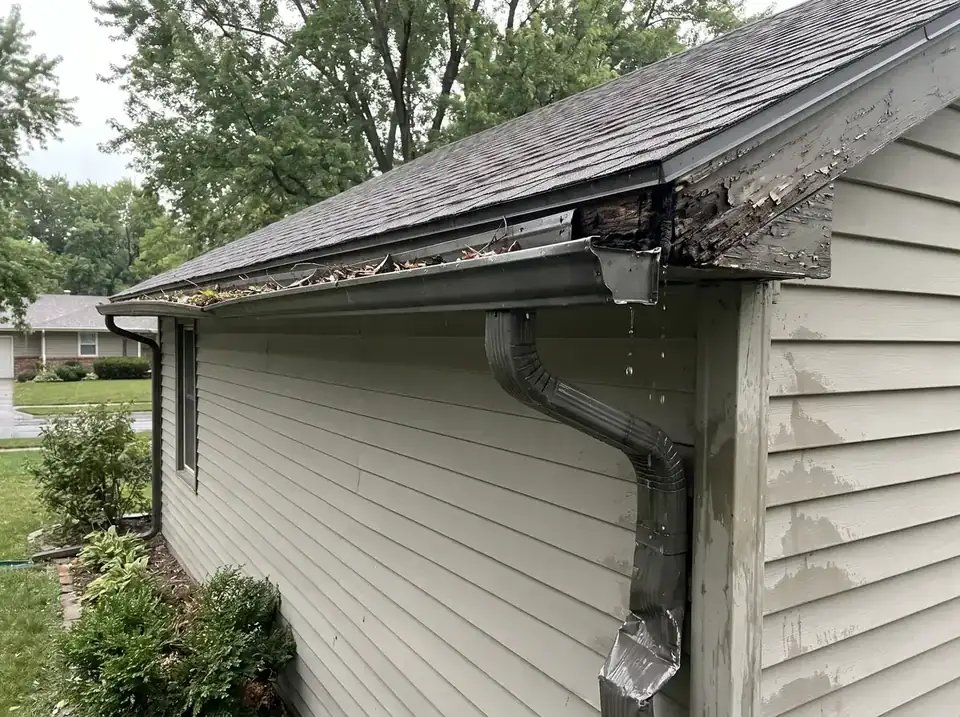
Jab a screwdriver tip into the wood near each miter and under each drop. Healthy trim pushes back; rotten trim lets the tip sink. Blistered paint, dark tracks and a widening gap at the soffit are further clues.
| Clue | What it points to |
|---|---|
| Mushy wood at a miter | Dripping corner or no flashing |
| One dark track down the board | A single seam leaking for years |
| Paint lifting along the whole eave | Water running behind the trough |
| Opening at the soffit | Board shrinking or pulling off |
| Soft rafter ends | Decay working inward |
The repair, in order
- Take down the trough along the bad stretch.
- Saw out decayed trim until the cut shows firm wood.
- Mend rafter ends and soffit as needed.
- Fit new boards primed and painted on every face.
- Add drip edge or an apron at the roof line.
- Put the trough back on screw clips and recaulk.
Trim vocabulary
| Word | Meaning |
|---|---|
| Fascia | The horizontal board at the roof edge that the gutter is fastened to |
| Soffit | The panel or boards closing off the bottom of the roof overhang |
| Rafter tail | Where each sloping roof timber stops at the eave; the trim board is nailed across these ends |
| Drip edge | A bent strip of metal fixed along the roof edge so water jumps clear of the wood and lands in the gutter |
| Gutter apron | L-shaped metal tucked beneath the first shingle course, its lower leg hanging into the trough |
| Hidden hanger | A bracket concealed inside the gutter that is screwed through the back wall into the fascia |
Which neighborhoods see it
Sterling Park and Sugarland Run houses often have trim that has sat behind dripping gutters for decades. In Countryside and Cascades, houses from the 1980s and 1990s are starting to show the same thing wherever the original gutters gave out.
Metal-wrapped trim
Some houses have their trim boards clad in aluminum coil. That saves on painting but can hide decay. Whenever the gutters come down, peel back a little cladding and check the wood.
Keeping the attic vented
If soffit panels are replaced, keep the vents or add some so air still moves through the attic.
Why fascia matters to gutters
Every hanger in a gutter system screws into the fascia. If the wood is sound, a gutter full of water and wet leaves stays put. If the wood is soft, screws pull out, the gutter sags and water spills behind it, which softens more wood. Fixing gutters without fixing the fascia usually means doing the job twice.
Finding the extent of the rot
Rot is rarely limited to the spot you can see. It often runs along the board from a leaking corner, and it can spread into the rafter tails and the edge of the roof deck. When the gutter comes off, a careful contractor probes along the whole length and cuts back to wood that resists a screwdriver. Replacing a short piece when the rot has gone further leaves a weak joint.
Materials for new fascia
Primed wood boards, painted on all sides before fitting, are the traditional choice. Composite and PVC trim boards resist rot and are increasingly common, though they cost more. Wrapping new wood in aluminum trim coil reduces painting but should only go over sound, dry wood. Whatever the material, the gutter needs something solid to screw into.
Soffit and attic air
Soffit panels close the underside of the eave. Many have vents that let air into the attic, which keeps the roof deck dry and helps prevent ice dams. When soffit is replaced, vents should be kept or added. Blocked soffit vents are a common reason attics run hot in summer and damp in winter.
Pests and openings
Gaps in soffit and fascia invite birds, squirrels and insects into the eaves. Repairing rot closes those openings. If animals are already in the attic, they should be dealt with before the eaves are sealed.
Stopping it coming back
- Fit drip edge or gutter apron so roof water goes into the gutter.
- Reseal corners and outlets before they drip for years.
- Keep gutters clean so they do not overflow onto the trim.
- Repaint wood trim before the paint fails completely.
- Check the eaves each fall when the leaves come down.
Timing fascia work with gutters
The cheapest time to repair fascia is when the gutters are already coming down, whether for replacement or a full rehang. Taking gutters off just to fix one board, then putting the old ones back, costs nearly as much labor. If the gutters are near the end of their life and the fascia is soft in several places, doing both at once usually saves money and leaves a system that starts fresh on sound wood.