
Sections on this page
- Clean-out frequency around Sterling
- What does a gutter cleaning include?
- Cleaning vocabulary
- Licensing and clean-outs
- DIY or hire out?
- Buried drains
- When guards make more sense
- Booking
- Clean-outs and trim checks
- Spring and fall cleanings
- What a professional cleaning includes
- Doing it yourself
- Why two-story cleaning is worth paying for
- Signs gutters need cleaning now
- Cleaning with guards
- Combining cleaning with repairs
- How much debris to expect
- Cleaning and roof debris
- Flushing downspouts
Clean-out frequency around Sterling
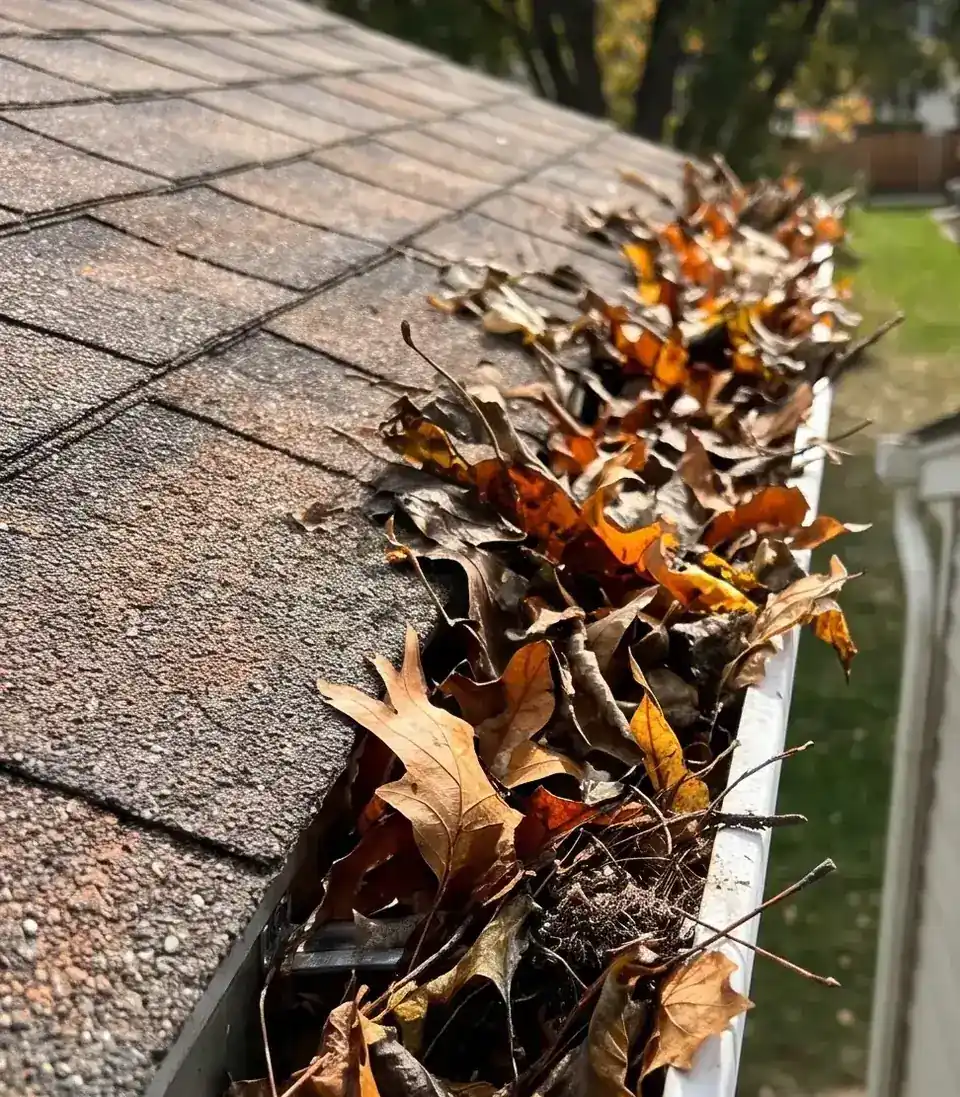
With big trees overhead, plan on two visits: one once the last leaves drop in late fall, a second in late spring when catkins and maple seeds have finished. Newer homes with young trees may need it only once a year.
| Season | What fills gutters | Suggested timing |
|---|---|---|
| Late fall | Oak, maple and tulip poplar leaves | After the last leaves drop, usually late November or December |
| Winter | Storm twigs, snow and ice | Check after storms |
| Spring | Oak flowers, maple seeds, pollen | Late May or June |
| Summer | Shingle grit, storm debris | Look before hurricane-season storms |
What does a gutter cleaning include?
- Set ladders on firm ground and never lean them on the gutter.
- Remove debris by hand along every run.
- Bag debris instead of leaving it in the beds.
- Flush each run toward the outlet.
- Clear downspouts and check buried drains take water.
- Note loose hangers, leaks, sags or soft fascia.
Cleaning vocabulary
| Word | Meaning |
|---|---|
| Outlet | The short tube through the trough floor that the pipe connects to |
| Elbow | A bent section that changes the pipe direction, either toward the wall or along it |
| Cleanout | A capped fitting at the pipe foot that gives access to the buried line for flushing |
| Buried drain | Corrugated or PVC pipe under the lawn that carries downspout water to a pop-up, curb or ditch |
| Pop-up emitter | A small lidded outlet at the end of a buried drain that opens when water pushes through |
| Splash block | A concrete or plastic tray that spreads downspout water across the lawn |
Licensing and clean-outs
Virginia's DPOR requires a contractor's license for work valued at $1,000 or more. A routine cleaning usually costs less than that, but if the cleaner also offers repairs or replacement that reach the threshold, ask for their license number and check it on the DPOR website.
DIY or hire out?
| House | DIY reasonable? | Notes |
|---|---|---|
| Single-story rambler, flat yard | Often | Sturdy ladder, dry calm day, helper |
| Two-story colonial | Risky | Tall ladders on hard surfaces |
| Townhouse with a deck below | Risky | Awkward ladder placement |
| Steep or wet roof | No | Slippery |
Buried drains
Many homes in Cascades, Ashburn and South Riding have downspouts feeding buried drains that end at a pop-up in the lawn. Leaves and grit that pass the gutter settle in those pipes. Ask whether the cleaner checks them.
When guards make more sense
Paying for two or three clean-outs every year? Fine mesh can cover its price in a handful of seasons. See gutter guards.
Booking
Demand peaks in late November. Book early, or pick a slot in early spring, to wait less.
Clean-outs and trim checks
A clean trough also reveals the trim behind it. While debris is out, it is easy to spot soft wood, rusty nails and gaps at the roof edge, so ask the cleaner to mention anything they notice.
Spring and fall cleanings
Under trees, a single annual cleaning is rarely enough. Fall cleaning, after the leaves drop, clears the biggest load before winter, so meltwater can drain and ice does not build on wet debris. Spring cleaning clears oak catkins, maple seeds and the leaves some oaks hold through winter, before summer thunderstorms arrive. Houses with few trees may manage with one cleaning a year.
What a professional cleaning includes
A full cleaning usually means removing debris from every gutter by hand or with tools, bagging it, flushing each downspout and checking that water runs freely to each outlet. Many contractors also look for problems along the way: loose hangers, leaking corners, soft fascia and damaged downspouts. Ask whether the cleaning includes flushing downspouts and whether debris is hauled away or left in bags.
Doing it yourself
On a single-story house with easy ground access, many homeowners clean their own gutters. Use a sturdy ladder on firm ground, with a stand-off so the ladder does not rest on the gutter. Wear gloves, and scoop debris rather than pushing it into the outlet. Flush each downspout with a hose afterward. Never work on a ladder alone, in wet or windy weather or near power lines.
Why two-story cleaning is worth paying for
Two-story walls, walkout basements and steep lots mean tall ladders. Falls from ladders are a common cause of injury. A contractor with the right equipment and experience can clean a two-story house safely and quickly. On houses under heavy tree cover, the cost of regular professional cleaning is part of the case for guards.
Signs gutters need cleaning now
- Plants or seedlings growing out of the gutter.
- Water pouring over the front lip in moderate rain.
- Gutters pulling away from the fascia under the weight.
- Dark streaks or stains on the siding below.
- Birds or insects nesting in the debris.
Cleaning with guards
Guards cut the amount of cleaning but do not end it. Mesh may need a brush in spring, and outlets should still be checked once a year. Some contractors offer a guard check as part of a cleaning visit.
Combining cleaning with repairs
If the contractor finds problems during a cleaning, small repairs can often be done the same day. Ask for a price before extra work starts.
How much debris to expect
A two-story house under several large oaks can produce many bags of debris in a fall cleaning. Houses with few trees produce far less. Contractors may price cleaning by the house, by footage or by the amount of debris, and some charge more for heavy loads or tall walls. Ask how the price is set so there are no surprises.
Cleaning and roof debris
Leaves and needles also collect on roofs, in valleys and behind chimneys. That debris washes into gutters with the next rain. Some contractors clear valleys as part of the cleaning; ask whether it is included.
Flushing downspouts
Cleaning the gutter but not the downspouts leaves half the job undone. Debris pushed toward outlets collects in elbows and can block them by the next storm. A hose run down each outlet after cleaning shows whether water flows freely. If it backs up, the downspout or drain below needs clearing too.