
Sections on this page
- What buildings are covered?
- How is a commercial gutter job planned?
- Commercial vocabulary
- Townhouse and condo associations
- Metal roofs and snow
- Licensing
- Maintenance schedules
- Who this covers
- Box gutters and collector heads
- Access and safety
- Maintenance plans
- Multi-family buildings
- Licensing on larger jobs
- What to have ready when calling
- Common problems on commercial roofs
- Budgeting for commercial work
- Records for property managers
- Coordinating with roofers
- After-hours and weekend work
- Ice at entrances
What buildings are covered?
| Building | Typical gutter work |
|---|---|
| Office and flex buildings along Route 28 | Box gutters, scuppers, collector heads |
| Retail centers on Route 7 | Large K-style or box gutters, big downspouts |
| Churches and halls | Tall eaves, sometimes copper or half-round |
| Townhouse and condo associations | Long runs, many downspouts, scheduled cleaning |
| Schools and community buildings | Heavy-gauge gutters, planned maintenance |
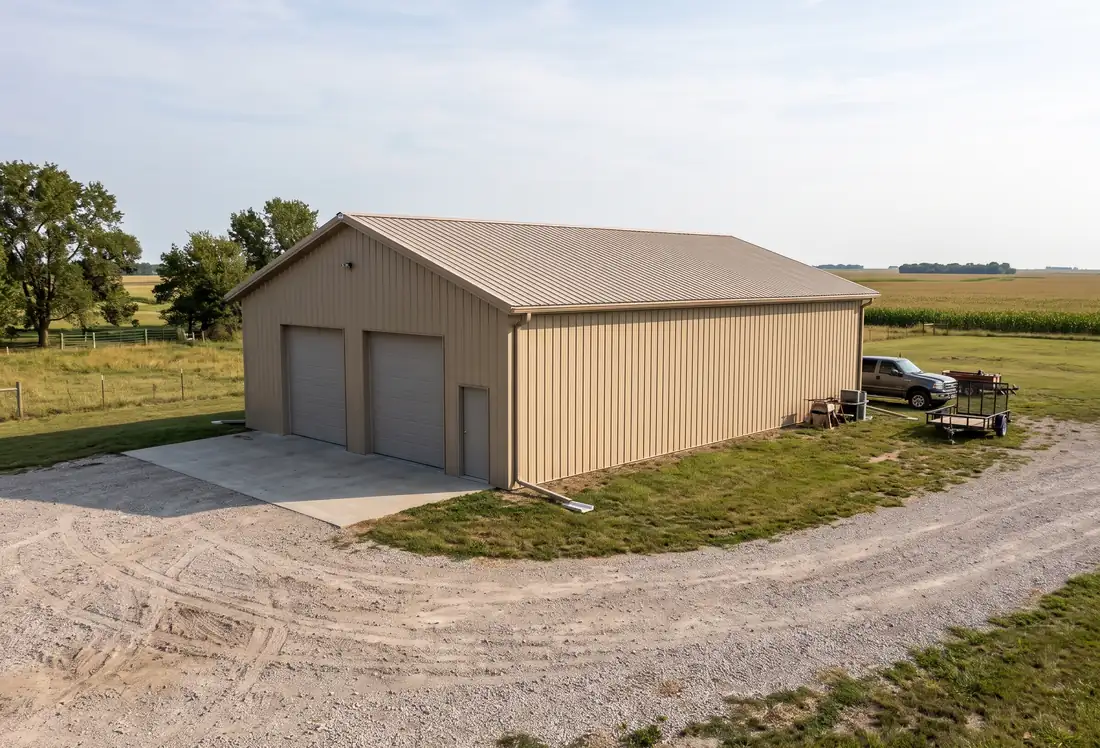
| Warehouses and metal buildings | Galvalume box gutters, large downspouts |
How is a commercial gutter job planned?
- Survey roof areas, slopes and drainage points.
- Size gutters and downspouts to the roof and any scuppers.
- Plan access: lifts, parking, hours and safety zones.
- Remove failed sections or linings.
- Install gutters, collector heads and downspouts.
- Connect to the site's storm drainage.
- Test and agree a maintenance schedule.
Commercial vocabulary
| Word | Meaning |
|---|---|
| Box gutter | A large rectangular gutter, often on commercial roofs or built into cornices |
| Scupper | A slot cut through a low roof wall so water can leave a flat roof |
| Collector head | A funnel box catching flow from a wall slot or two troughs before it enters the pipe |
| Expansion joint | A joint in very long runs that lets the metal move with temperature |
| Gauge | How thick the metal is: .027 or .032 inch for aluminum, sold by weight per square foot for copper |
| Buried drain | Corrugated or PVC pipe under the lawn that carries downspout water to a pop-up, curb or ditch |
Townhouse and condo associations
Associations in Sugarland Run, Cascades, Ashburn and South Riding manage long rows of townhouses with many downspouts. A rolling program of cleaning, inspection and repair, building by building, keeps costs predictable and finds small leaks before they reach units.
Metal roofs and snow
Metal roofs shed snow quickly. Gutters must be positioned and fastened so sliding snow does not tear them off, and downspouts sized to carry fast melt. The January 2016 blizzard put 22.1 inches on Dulles in a day.
Licensing
Commercial gutter work usually exceeds Virginia's $1,000 threshold, and larger jobs need a higher license class. Under the Board for Contractors' consumer protection statement, Class B covers projects of $30,000 up to $150,000 and Class A larger ones.
Maintenance schedules
| Property | Suggested schedule |
|---|---|
| Townhouse association under trees | Twice a year plus after storms |
| Office or retail | Once or twice a year |
| Metal building | Yearly and after snow or ice |
| Church or historic building | Yearly, with a lining check |
Who this covers
Commercial gutter work around Sterling covers a wide range: retail strips along Route 28 and Route 7, office and flex buildings near Dulles, churches and schools, apartment and condominium buildings, and warehouses and shops with metal roofs. Each has its own drainage setup and access challenges. Many involve property managers or associations rather than a single owner.
Box gutters and collector heads
Large roofs often drain into box gutters, which are wide rectangular troughs usually made of steel. Flat and low-slope roofs may drain through scuppers in a parapet wall into collector heads, which feed large downspouts. These parts are sized for big volumes and need regular checks. Leaves, debris and ice can block them as easily as residential gutters.
Access and safety
Commercial work often needs lifts rather than ladders, and may require scheduling around business hours, traffic and pedestrians. Contractors working on taller buildings should have the right equipment and follow safety rules. Ask how the work will be done and how the site will be kept safe for tenants and customers.
Maintenance plans
Many commercial properties benefit from a regular inspection and cleaning schedule. Twice a year, in spring and fall, is common. Regular checks catch blocked outlets, loose sections and leaking seams before they cause interior damage or icy sidewalks.
Multi-family buildings
Condominium and apartment buildings often have long gutter runs over entrances, walkways and parking. Overflow onto entrances becomes a slip hazard in winter. Downspouts that discharge onto walks can freeze. Planning downspout routes away from paths, and keeping gutters clear, helps prevent problems.
Licensing on larger jobs
Larger commercial projects can exceed the value covered by a Class C license. Virginia's license classes set limits on project size. For bigger jobs, check that the contractor's license class covers the full value of the work.
What to have ready when calling
- The address and type of building.
- The roof type: pitched, flat or metal.
- Where the problem is: overflow, leaks, ice or damage.
- Any access limits, such as hours or tenant areas.
- Who approves work: owner, manager or association.
Common problems on commercial roofs
| Problem | Where it shows | Likely cause |
|---|---|---|
| Water over the box gutter | Wall staining, ice on walks | Blocked outlet or undersized gutter |
| Leaking seams | Drips at joints and corners | Aged sealant or failed solder |
| Overflowing scupper | Water down the parapet face | Blocked collector head |
| Loose downspouts | Rattling, separation | Failed straps |
| Ponding at the roof edge | Standing water after rain | Clogged drains or poor slope |
Budgeting for commercial work
Commercial gutter projects vary widely in cost, depending on building height, access, materials and the amount of custom fabrication. National residential price ranges do not apply well. A site visit and written scope are needed for any realistic figure. For properties with several buildings, ask whether a phased plan or a maintenance agreement makes sense.
Records for property managers
Keeping a log of inspections, cleanings and repairs helps property managers plan budgets and spot recurring problems. Photos before and after each visit are useful for owners, boards and insurers.
Coordinating with roofers
On commercial buildings, gutters and roof edges are closely linked. If a roof is being replaced or repaired, it is often best to coordinate gutter work at the same time, so flashing, scuppers and gutters are fitted together. Ask whether the gutter contractor can work with the roofer on the job.
After-hours and weekend work
Retail and office properties sometimes need work done outside business hours to avoid disrupting tenants and customers. Ask whether the contractor can schedule early mornings, evenings or weekends, and whether that changes the price.
Ice at entrances
Gutters over entrances and loading areas deserve extra attention in winter. A blocked outlet above a door can drip and refreeze into a dangerous patch below. Checking these outlets before cold weather and keeping downspouts away from walks reduces the risk for staff and visitors.